
Approximately 80% Report Experiencing a Shortage of Global Talent
24% of Japanese companies find hiring foreign nationals effective compared to 49% of foreign-affiliated companies—a twofold difference
en world Japan K.K., one of Japan’s largest recruitment firms specializing in high-class and global talent (head office: Chuo-ku, Tokyo; President: Yusuke Yamamoto), conducted a survey of managers responsible for hiring decisions at Japanese and foreign-affiliated companies.
Survey Results Overview
Insights
 en world Japan
Contract Professionals Division
Deputy & Associate Director
Kango Nakatake
The environment surrounding companies is undergoing rapid and complex changes driven by various factors such as declining birth rates and an aging population, rising inbound demand driven by a weaker yen, the globalization of business, the acceleration of digital transformation (DX) and AI adoption, and inflation and rising interest rates. Amid these changes, the recruitment and development of capable talent remains a top priority for companies. This survey of managers and above clearly highlights the growing talent shortage at both Japanese and foreign-affiliated companies.
While prioritizing the acquisition of talent who can perform immediately on a global stage, the companies surveyed are also responding flexibly by combining various measures, including the use of external resources, reskilling, and revising HR systems.
In particular, the employment of foreign nationals and so-called “senior” talent—employees over the age of 60—is increasing, with approximately 70% of companies hiring foreign nationals and around 50% utilizing senior talent. However, employing such talent is not without its challenges. Japanese companies continue to struggle to provide multilingual support and to strengthen the management and development frameworks needed to maximize the effectiveness of foreign employees. Foreign-affiliated companies appear to face obstacles in securing senior talent due to slower approval and decision-making processes compared to Japanese companies, even as they recognize the value of such hires.
But whether foreign-affiliated or domestic, the greatest common challenge companies in Japan face today is accurately assessing candidates’ skills and experience. While developing systems to accommodate a diverse range of talent, implementing selection processes that allow hiring teams to clearly envision how candidates will perform once they join will be key to securing capable talent and building organizations that are resilient to change.
Data Analysis and Commentary
1. Nearly 80% of companies report a global talent shortage, with Japanese companies feeling the greatest impact on mid-career hires. In contrast, foreign-affiliated companies see the biggest gap at the associate level.
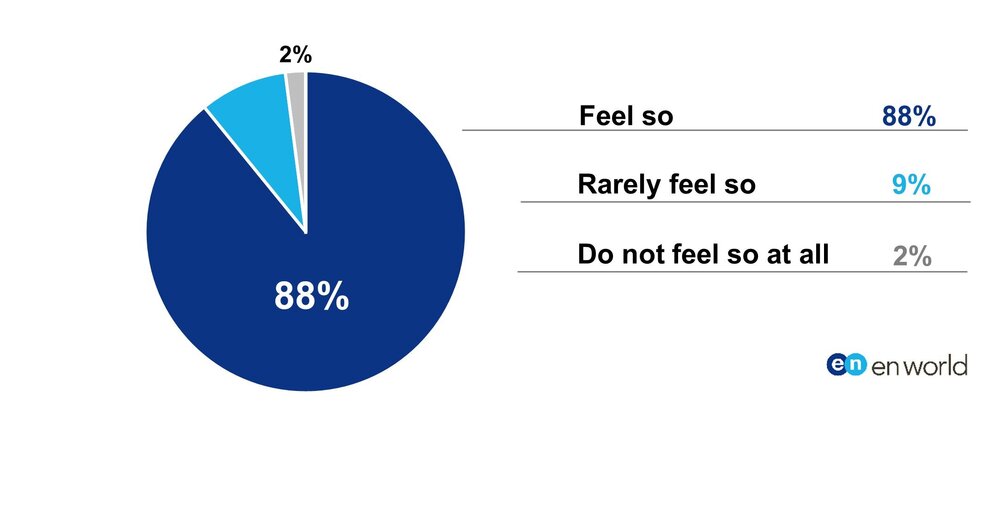
First, regarding the overall perception of talent shortages, 88% of respondents indicated that they feel a talent shortage at their workplace. [Figure 1]
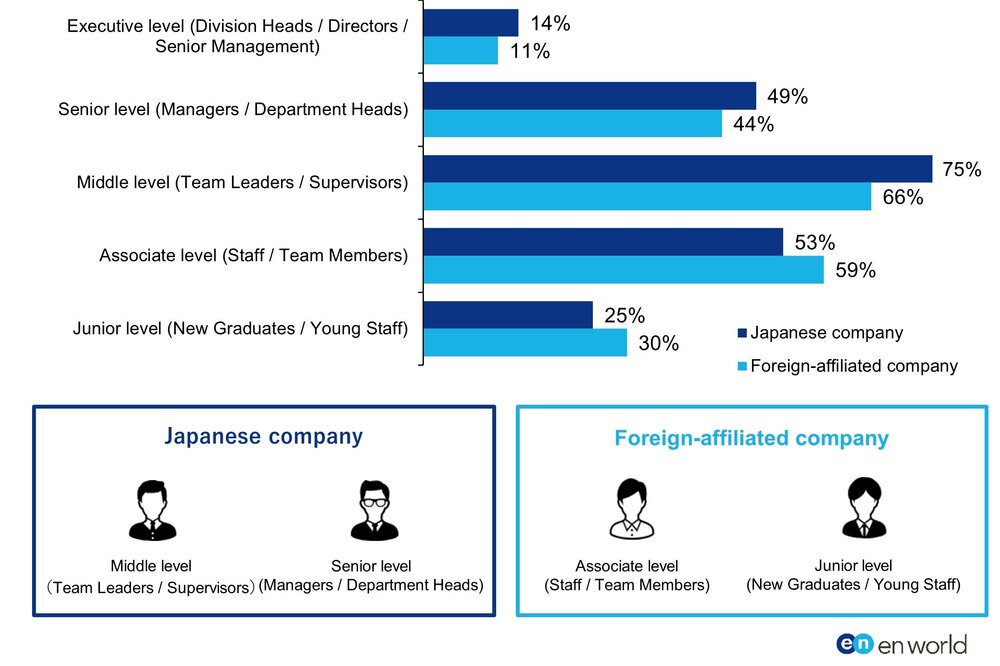
Overall, the job levels most commonly cited by respondents as experiencing talent shortages were mid-career level roles (supervisory/leadership), followed by associate-level roles (staff/member). Among Japanese companies, shortages were relatively more pronounced in core talent segments such as mid- and senior-level roles, indicating strong demand for personnel responsible for organizational management and decision-making. Conversely, foreign-affiliated companies tended to report talent shortages in front-line operations roles, such as associate-level and junior-level positions. These findings suggest that although both Japanese and foreign-affiliated companies face a common talent shortage, they differ in where they most acutely feel the impact. [Figure 2]
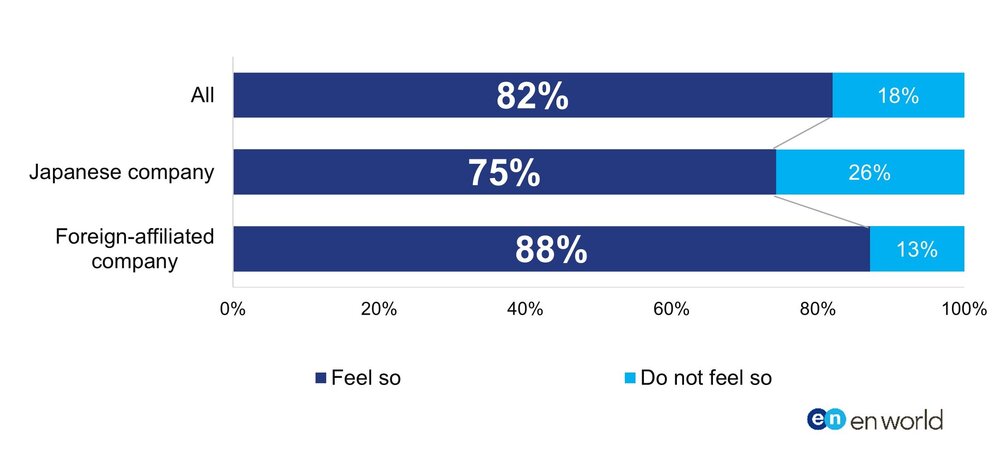
Of the companies that reported experiencing talent shortages, the proportion of respondents who said that they perceived a shortage of talent capable of performing in global business, or so-called “global talent,”1 was high for both Japanese and foreign-affiliated companies at 75% and 88%, respectively. These results point to a tight talent market in which employees who can be immediately effective in global business are in short supply across the board. The need for talent capable of performing on the international stage is becoming increasingly pronounced not only among foreign-affiliated companies but also among Japanese companies, intensifying competition for global talent. [Figure 3]
*1 Global talent: individuals who can deliver results in business transactions or environments involving multinational participation or multiple languages, where Japanese customs or the Japanese language alone are insufficient.
[Figure 1] Do you feel there is a talent shortage at your workplace?
 [Figure 2] At which levels is the talent shortage most acutely felt? (Multiple responses allowed)
*0% of both Japanese and foreign-affiliated companies selected the answer, “don’t know.”
[Figure 3] Do you perceive a shortage of talent at your workplace who are capable of performing in global business?
*0% of both Japanese and foreign-affiliated companies selected the answer, “don’t know.”
2. Nearly 70% of Japanese companies hire foreign nationals, yet perceived effectiveness is just 24%, compared with 49% for foreign-affiliated companies—a twofold gap.
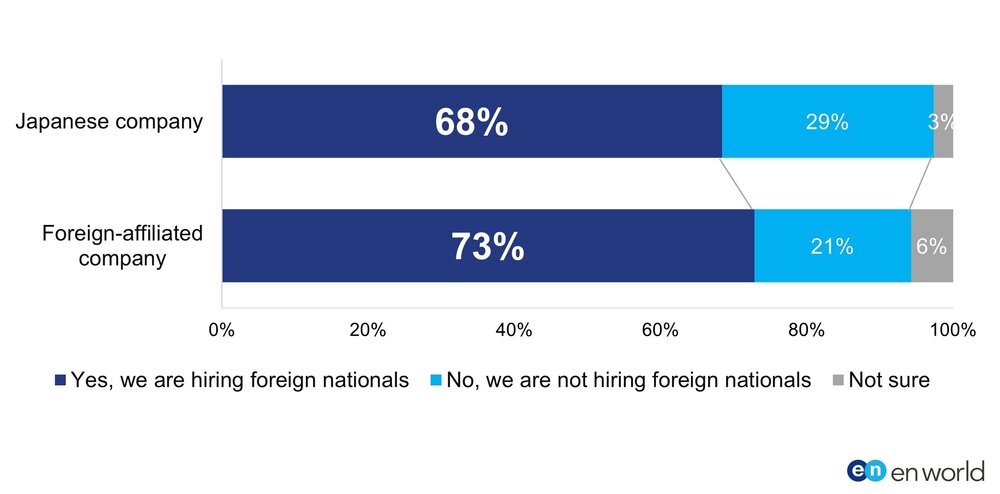
In this survey, “global talent” refers to individuals capable of delivering results in multinational and multilingual environments. 68% of Japanese companies and 73% of foreign-affiliated companies that reported a shortage of global talent within their organizations responded affirmatively that they were hiring foreign nationals to address the shortage, with no significant difference between the groups. Given the large proportion of companies responding to the global talent shortage by hiring foreign nationals, this survey also examined the implementation and effectiveness of such hiring initiatives. [Figure 4]
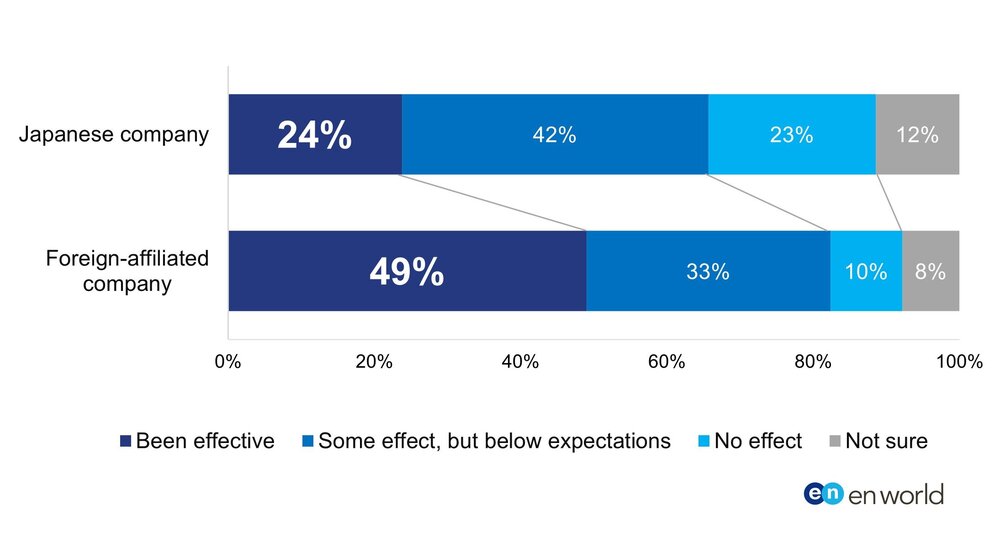
While the percentage of Japanese and foreign-affiliated companies that indicated they were hiring foreign nationals to address their shortage of global talent was similar, there was a significant difference in the perceived effectiveness of this strategy between the two groups. Only 24% of Japanese companies reported that hiring foreign nationals had “been effective,” including responses of “more effective than expected” and “as effective as expected,” in addressing the shortage of global talent—a 25-point gap compared with the 49% of foreign-affiliated companies who provided the same answers. These results reveal that, although the demand for foreign talent is similar between Japanese and foreign-affiliated companies, the former are not realizing the full potential of such hires. [Figure 5]
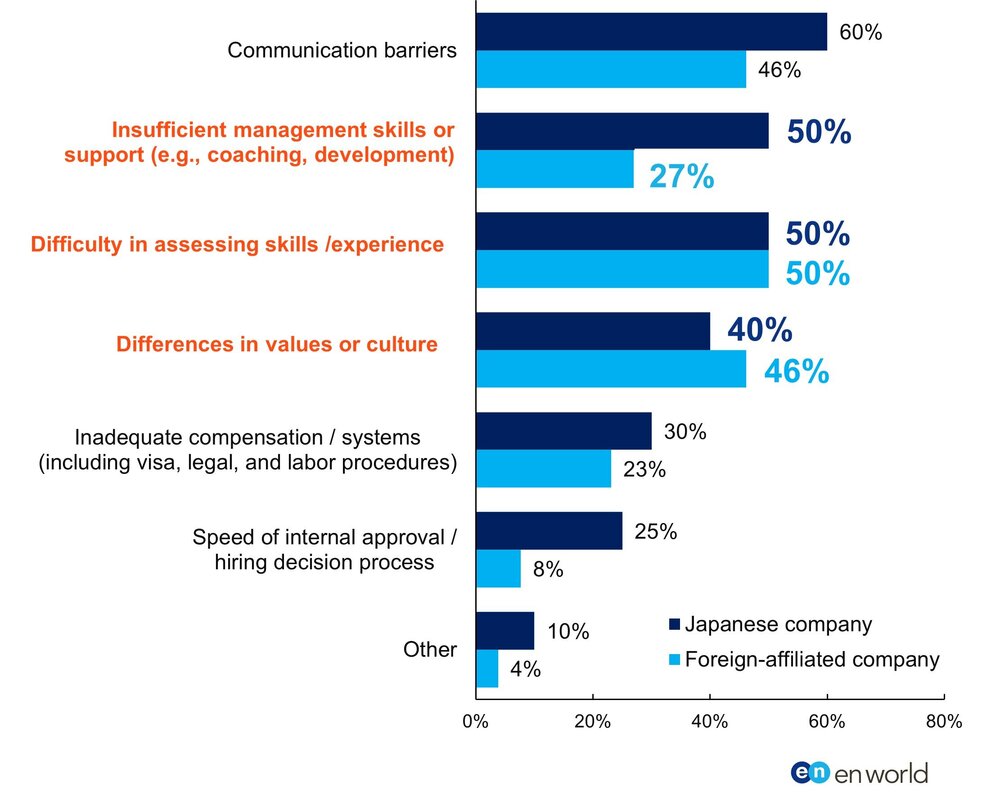
When asked to identify factors limiting the effectiveness of foreign employees, 50% of Japanese companies and 27% of foreign-affiliated companies cited a lack of internal management and support skills, such as coaching and development. 50% of both groups indicated difficulty in accurately assessing candidates’ skills and experience, and 40% of Japanese companies and 46% of foreign-affiliated companies cited gaps in values and culture. Given the relatively high frequency with which respondents cited these factors, the findings suggest that, in addition to designing effective talent management systems, skill assessment is also important. Language-related challenges also seem to persist, with 60% of Japanese companies and 46% of foreign-affiliated companies answering that language and communication barriers hindered the effectiveness of foreign employees. [Figure 6]
[Figure 4] Are you hiring foreign nationals to address the shortage of global talent?
 [Figure 5] Do you feel that hiring foreign nationals is effectively addressing the talent shortage?
[Figure 6] If hiring foreign nationals is not effectively addressing the talent shortage, please select from the options below the factors you believe are responsible, both at the hiring stage and after hiring. (Multiple selections allowed)
3. Foreign-affiliated companies leverage external resources to address the global talent shortage, while Japanese companies focus on organizational reform.
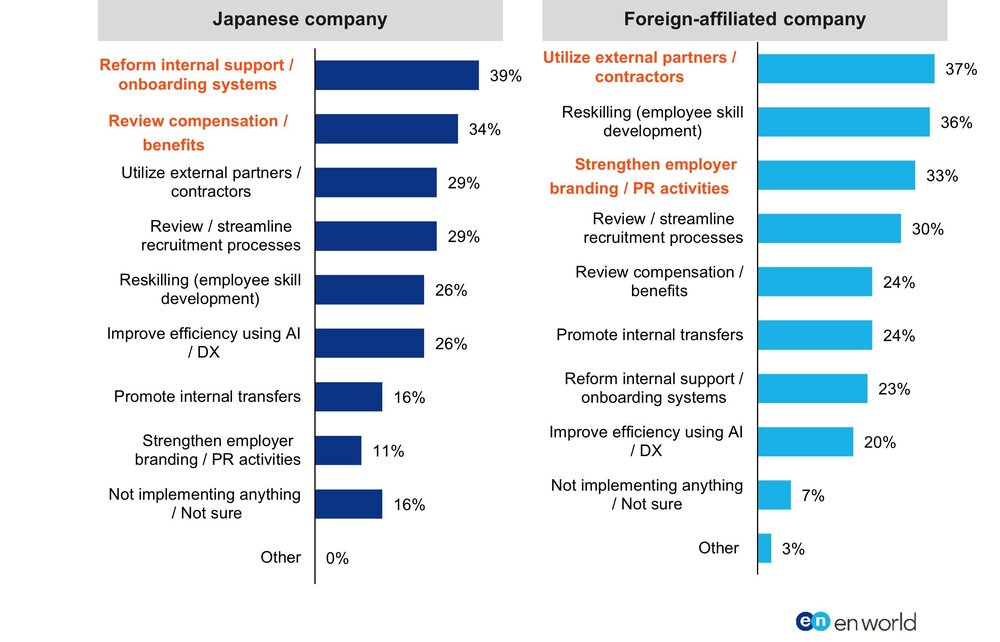
When asked about strategies to address the shortage of global talent beyond hiring foreign nationals, many Japanese companies reported actions that focused on reviewing internal organizational structures and systems, such as reforming onboarding and integration frameworks (39%) and reviewing compensation and HR systems (34%). In comparison, foreign-affiliated companies showed a greater emphasis on external approaches, including leveraging external partners and outsourcing (37%) and strengthening recruitment branding and communications (33%). [Figure 7]
[Figure 7] Please select the measures you are implementing to address the global talent shortage. (Multiple selections allowed)
4. Foreign-affiliated companies also report greater effectiveness from hiring “senior talent” than Japanese companies, with HR systems and skill assessment as key factors.
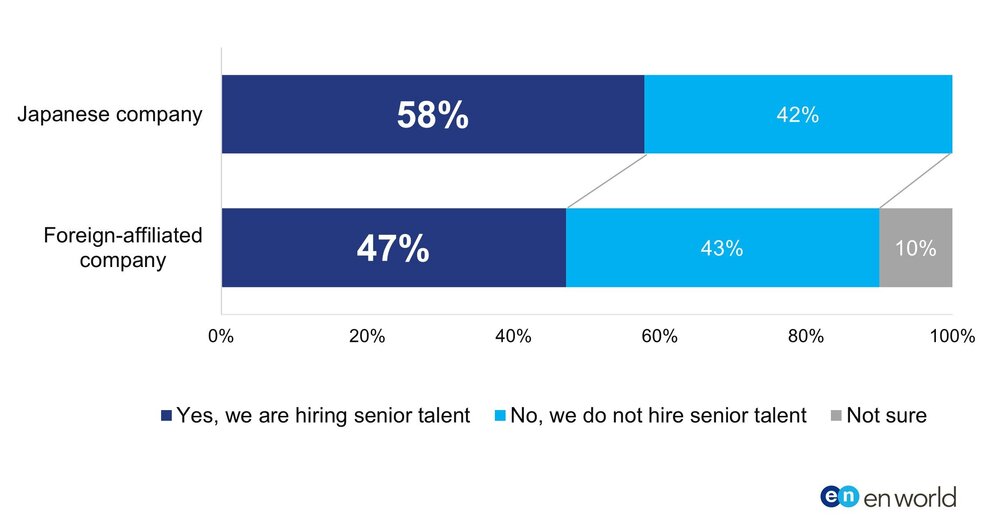
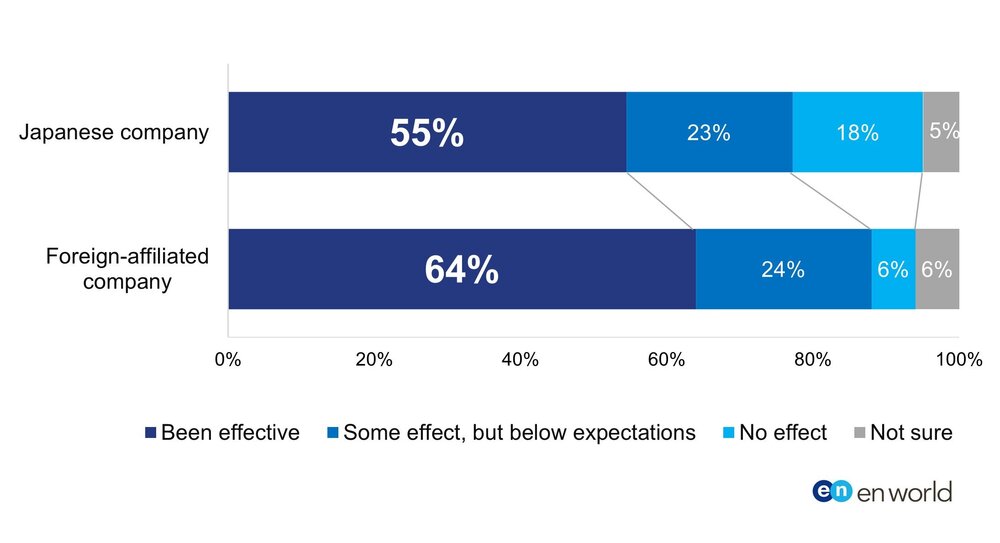
Respondents who indicated a shortage of talent capable of succeeding in global business were asked whether they are hiring “senior talent”—talent aged 60 or older—to address this shortage. A higher proportion of Japanese companies responded affirmatively than foreign-affiliated companies, at 58% and 47%, respectively. [Figure 8] However, 64% of foreign-affiliated companies reported that the senior talent they did hire had been effective, answering that they had been “more effective than expected” and “as effective as expected,” compared to 55% of Japanese companies. [Figure 9]
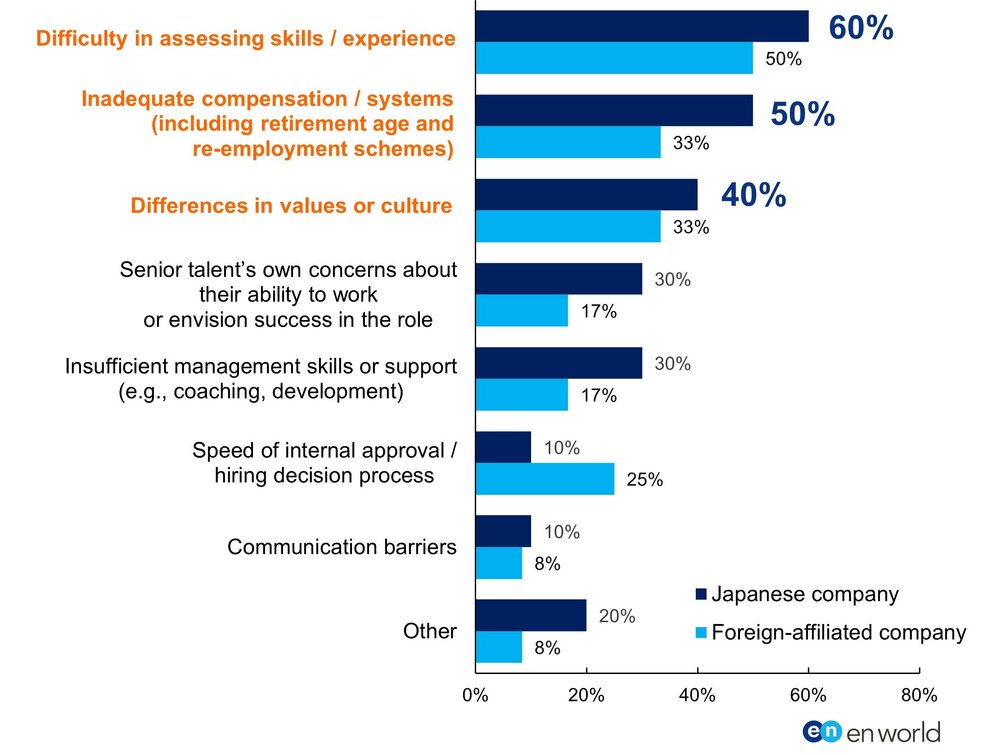
Additionally, a higher proportion of Japanese companies reported that hiring senior talent had either not been effective or that they didn’t know whether it had been. The top factors companies cited for why hiring senior talent had not been effective were difficulty assessing candidates' skills and experience, as well as insufficient compensation and HR systems, including retirement and re-employment policies. These results indicate ongoing challenges in ensuring the success and retention of senior talent. [Figure 10]
[Figure 8] Are you hiring “senior talent” (e.g., candidates aged 60 and over) to address the talent shortage?
 [Figure 9] Do you feel that hiring “senior talent” is effective in addressing the talent shortage?
 [Figure 10] If hiring “senior talent” is not effectively addressing the talent shortage, please select the factors you believe are responsible, at both the hiring stage and after hiring, from the options below. (Multiple selections allowed)
[Survey Overview]
Methodology: Online survey
Coverage: Nationwide (Japan)
Survey period: November 21–28, 2025
Sample size: 147 valid responses
Respondent breakdown: 58 from Japanese companies and 89 from foreign-affiliated companies
Response format: Single-choice and multiple-choice questions
About en world Japan
en world Japan is a recruiting firm specializing in global talent acquisition, with expertise in recruitment and job placement support for middle- to high-level positions at foreign-affiliated and Japanese global companies.
Through services such as permanent placement, executive search, professional staffing, and recruitment process outsourcing (RPO), the company supports both individuals and organizations as a long-term partner in achieving growth and navigating change.
Press Contacts
en world Japan K.K. 12F Tokyo Square Garden 3-1-1 Kyobashi, Chuo-ku Tokyo, 104-0031
Email:enworld-pr@enworld.com